|
Can't find the answer to your question? Click here
to email me now for a prompt reply.
How did you get started with the runes?
I was about 15 when I first noticed runes on a monument in Cumbria,
England. I got interested because it was something my all-knowing father
couldn't tell me about. Later an elderly relative from my mother's side
of the family revealed to me that she was a runemistress and passed much
of her knowledge on to me. I have been building on that initiation
ever since.
About 10 years ago I started learning something of the Anglo-Saxon
language and culture, and that is when I conceived the idea for the Runemaker
websites.
You can find some information
about that on the About Oswald page
on the main Runemaker website.
What is the Futhark?
Futhark is the name for
the rune row, or full rune set. It does the same job as our alphabet.
Due to changes in pronunciation over the centuries, the Anglo-Saxons
came to call it the Futhorc, but it's basically the same word.
How did this name come about? Same way as
the name alphabet came about, I guess. The word alphabet
is made up of the first two letters in the Greek alphabet, Alpha
and Beta. Those were the Greek names for A and B. I guess
everybody knows that.
So naming the rune set
follows the same principle. We take the first six runes Fehu, Uruz, Thurisaz, Ansuz, Raido and Kauno
- put the sounds they represent together, and they make the word Futhark.
(The Th sound is
represented by just one rune, Thurisaz.).
Why are these the first six
runes? I don't know. Nobody knows. You might just as well ask why did the Greeks
decide to have Alpha and Beta as their first two letters? Why didn't they
choose Omega and Delta? I don't suppose
anyone knows the answer to that, either. The fact remains that the ancients
most frequently wrote the rune set in the order I have put them in, with Fehu, Uruz,
Thurisaz, Ansuz, Raido and
Kauno as the first six.
How many runes are there?
There are 24 runes in the
Ancient Pagan Futhark also known as the Anglo-Freisian Futhark. My rune
sets also include a blank rune because some folks like to have a rune
representing Destiny or Fate. I don't use it myself. This idea is quite
modern and was advocated by Ralph Blum with his "Book of
Runes" but, contrary to common belief, he was not the originator of
the blank rune which is referenced in research materials in my
possession as early as the 16th Century.
The earliest documented rune
set is the Elder Futhark, also known as the Norse or Viking Futhark.
This rune set originally had the same 24 runes, but with slightly different shapes.
Over the centuries Scandinavian users reduced the Norse Futhark to just
16 runes - presumably to simplify the task of writing - so that some of
the runes had to do double-duty for two or three sounds. This later
adaptation (7th-8th Century) became known as the Younger Futhark.
The runes brought to Britain by
Angles, Saxons and Jutes migrating from Scandinavia and Holland were
called the Anglo-Friesian runes. As their use spread through Saxon
England they became known as the Anglo-Saxon runes. This Futhorc also
developed over time, but in the opposite direction; it expanded to a
total of 33 (possibly as many as 38 in Northumbria) runes before they fell
into disuse.
There are other Futharks of
more modern development such as the Armanan runes developed by Guido von
Liszt in the 20th Century, and a system of runes invented by J R R
Tolkien for use in his books The Hobbit and The Lord of the Rings
trilogy.
What's the difference between Viking, Norse, Anglo-Saxon and
other types of runes?
Viking
and Norse are both alternative names for the runes of the Elder Futhark,
the original rune set as it first appeared in Northern Europe.
Anglo-Friesian runes are almost
identical to the Elder Futhark runes (just a few differences in shape). They were in use in Northern Germany and Holland and were
brought to Britain by migrant tribes.
The Anglo-Saxon runes are a
development from Anglo-Friesian. Although maintaining the 24 original
runes for several hundred years, the shape of the runes altered over
time. The Uruz rune became an inverted V, the Ansuz rune adopted a new
form for the upper branch, the Kauno rune changed to a staved form like
a small k with the upper leg missing, Hagalaz gained an extra cross-bar,
Jera became a staved rune, and the Ingwaz rune grew 4 tails. The order
was changed slightly by the reversal of Othila and Dagaz.
The runes you see on my pages
are the Elder Futhark and Anglo-Saxon ones, but I do not go so far as to include the much
later additional 9 runes adopted in Northumbria.
You will also see reference to
the Younger Futhark, where the Scandinavian users reduced their Futhark
to just 16 runes in the 7th-8th century AD, and the Northumbrian runes -
a very much later augmented rune set that grew to 33 (or perhaps even
38) runes.
More modern rune sets include
the invented Armanan runes of the Nazis, Tolkein's runes of the 20th
century, and a contrived rune order from 1980s author Ralph Blum.
Any reference you may see to
"Celtic", "Witch" or "Druid" runes are quite inaccurate
- there are no such runes. See the later FAQ.
How can I write English names and messages in runes?
You just substitute runes for
each letter of the message or name and put a colon between each word.
Don't forget that the runes are phonetic, i.e. you spell things the way
they SOUND, not the way they LOOK. For example TH is represented by just
one rune, Thurisaz; not Tiwaz with Hagalaz.
You can find the letter
equivalents and a guide to pronunciation on the
bindrune
introduction page and a much fuller
transcription tutorial in the
members area.
How can I learn about runes?
A. I'm sorry I can't personally
help you with anything more than you will find in these FAQs, the rest
of the Runemaker Group websites, and in the Rune
Forum discussion group. There is a lot of information here if you
care to look for it.
I can recommend the Rune School
who offer broad-based courses on the mystic application of runes. Their
website address is:
http://www.runeschool.org/index.htm
There is also a self-help rune
student group called the Rune Net that may be able to provide you with
more resources. Their website address is:
http://www.mackaos.com.au/Rune-Net/
Freya Aswynn also operates an excellent rune
correspondence from her website at
http://www.aswynn.co.uk
I do not offer tuition myself for two reasons. First, I am not a very good teacher; and second, a lot
of the knowledge I have gained is secret. So I just concentrate on
design work and making stuff. I will always try to
answer email queries when I have the time, but please check these FAQs,
the various search engines (navigation panel, top left), and the
Rune
Forum first. Your question has probably already been answered.
What is a bindrune and what is it for?
Personal
bindrunes are amulets where a design is compiled from your personal initials to form a kind of runic
monogram.
They are used to reinforce one's personality and emphasize the
positive qualities of the psyche.
Practical bindrunes are used as talismans with a particular objective such as improved
health, business or financial success, harmony with a partner, love from a
special person, help with weight loss, personal protection, safety and
security of your home and personal possessions, etc. They are compiled
from the individual runes that represent the qualities one wishes to
enhance.
You
could easily draw a bindrune on a piece of paper, wood, stone or
anything and carry it with you hoping that it will have some effect. But
the unempowered bindrune will be so weak that you would probably not
notice any difference. For
a bindrune to work effectively it must be empowered (some runemasters
refer to this process as consecration) in the correct way. To
learn more about this subject, take a look at the
article on bindrunes in the public area,
or the more thorough coverage in the
members area.
Can you design a bindrune to help with my health,
love life,
career etc?
I certainly can. Check out the item on
Practical bindrunes in the members
area. You may find what
you are looking for there.
I do not provide custom-designed bindrunes for free, though. You will have to
sign up for one of my design services, check the
design services page for details. You can also order wooden amulets and key rings at just
$12.95 each (that includes tax, packing and shipping costs) on the main
Runemaker website.
If you just want to see the
design, I offer services on www.runemaker.com The
basic design service is priced at only US$15.95
Just knowing the right runes to use and
designing the bindrune is not enough to make it effective. For that to
happen, the bindrune has to be empowered properly and you can find out
about that on the Empowerment Rite
page of the members area.
I want to
make my own runes, can you help me?
Sorry, the answer to
that is no. If you just want to make a rune
set for fun, go ahead and use the information and shapes from the
information you will find over the 24 sites in the Runemaker Group.
But if you really want the
runes for serious divination work, you have two choices: First you can
learn the necessary skills for cutting marking and polishing the rune
pieces, then read about and learn all the requirements for carrying out
a successful empowerment rite. Or second, you can purchase a
professionally made set. To work properly a rune set must be empowered
by a very ancient and secret process.
Make sure the supplier has carried out the necessary ritual before
you buy - many manufacturers are not aware of the need for empowerment
and don't bother. You are better off buying from an individual
craftsman/woman that knows about runes and the empowerment requirement.
The big occult supplies websites buy their rune sets wholesale from
factories all over the world. A lot of the ceramic, glass and crystal
runes you see for sale on the www are actually made by a factory in
India. The owner of the factory once told me in all innocence that
neither he nor any of his staff have any idea what runes are. They just
make them to order from drawings sent to them by the American
wholesaler. The wholesaler obviously has no idea about runes either
because several of the rune shapes are wrong!
What does this runic inscription
mean?
If you send me a scan, photo or
drawing of the inscription by email I will do my best to translate it
for you, if it really is in runes.
You may find me listed as a
rune expert in some websites or reference books because I do research
and translation work for some of the big auction houses here in England. But don't worry, I won't
charge you any fees! It's a free service.
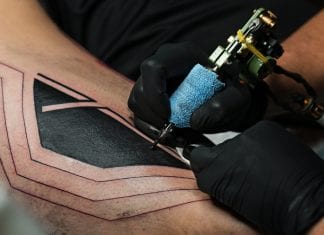
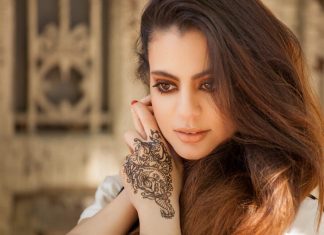
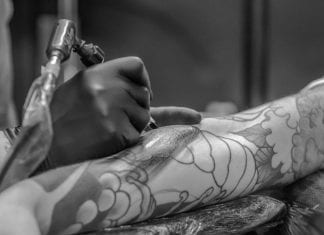
Can you help me design a runic tattoo?
I sure can, it's one of my most
popular services. I can design rune tattoos, bindrunes, rune scripts and
runic triads for tattooing. I also provide custom designs like Shieldknots and Helm of Awe interpretations, knotwork decals,
borders, etc.
Have a good browse around the website where you will find details of my design services for delivery by email starting at $15.95.
The members area contains a database of over 4000 personal bindrunes for use by private individuals and
tattoo artists - plus dozens of pages full of decorative and practical designs.
Where can I find out about Celtic,
Witch
or Druid runes?
You will find websites, books and
so-called experts out
there on the www that talk about Celtic, Witch or Druid runes, but these are
quite erroneous inventions of modern origin. There are no such things as
Celtic, Witch or Druid runes. In other words, these people are
misinformed, or they are just making it up.
Irish
Celts did have a strange written form called Ogham (pronounced
Oh-ehm) script used for a
small number of inscriptions, but Ogham is not related to the runic form
nor does it bear any more than a superficial resemblance.
The
fact is that Celts and Druids, the indigenous population of Britain had
no contact with Norse culture or anything to do with runes. When
migrants from Northern Europe started to settle the North and East of
Britain from around 500AD they brought their culture and runes
with them. By that time the great majority of Celtic tribes had already
started to adopt Christianity, so the pagan faith of the invader was
assimilated only minimally, if at all.
In fact the two cultures were constantly at war. The Celts were inexorably
driven back and reduced in number by the ferocity of their invaders, their supremacy in military know-how and their weapons. But during the
ensuing centuries the Christian faith of the Celts gradually overcame
the Pagan beliefs of the Norsemen, so that only remnants of runelore
survived. So if you are
looking for Celtic or Witch or Druid runes - forget it. They are modern
inventions and have no historical basis in fact. Anyone who tells you
different is talking though their hat - or somewhere else rather less
wholesome . . . .
That was the last FAQ
Can't find the answer to your question?
Click here for email assistance
|